
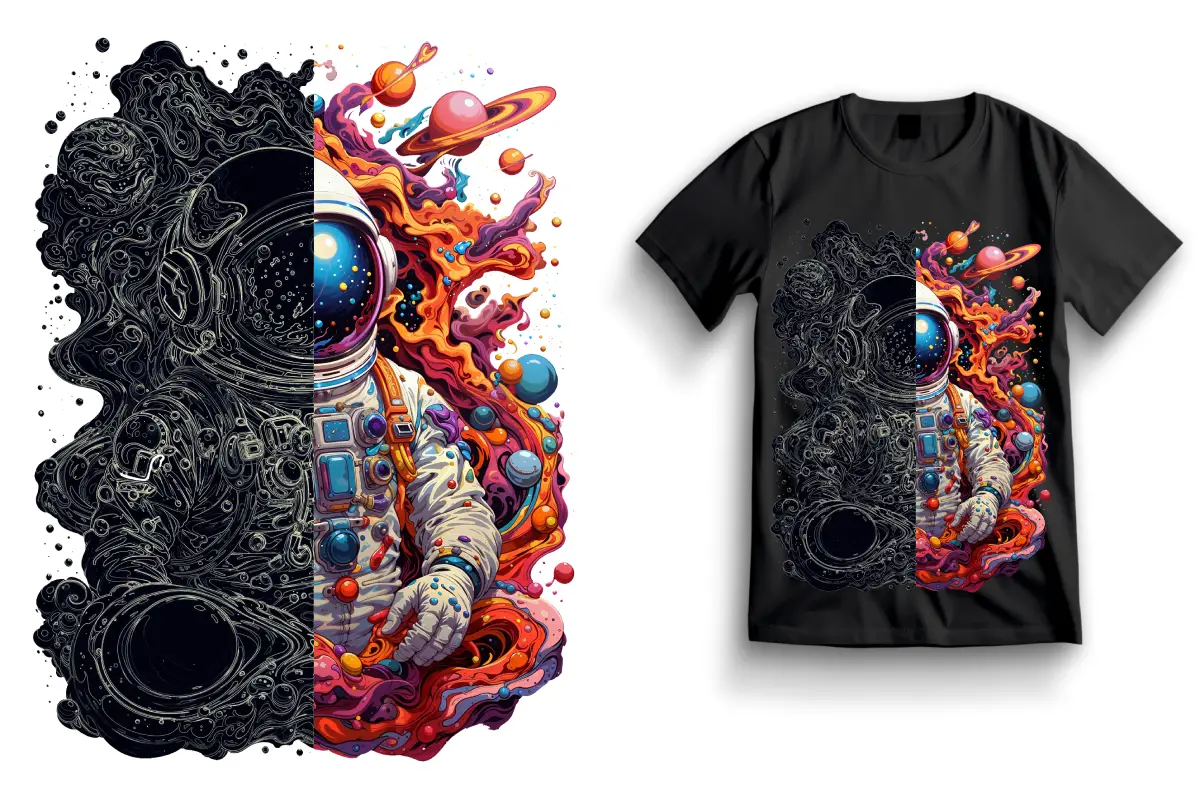
The custom apparel market is moving at a breakneck pace, forcing independent designers, print shops, and clothing brands to constantly adapt or risk losing their competitive edge. For years, decoration businesses were caught between the high setup overhead of traditional screen printing and the rigid, plastic texture of heat transfer vinyl. Today, the widespread adoption of premium dtf transfers has fundamentally transformed the industry, offering an agile, cost-effective method to execute complex, multi-colored artwork without design restrictions. By printing digital graphics onto a specialized film carrier and fusing them to textiles with a heat-activated adhesive, creators can deliver retail-grade garments quickly while keeping material waste to a minimum.
This technological shift means that entering or scaling an apparel line no longer requires thousands of dollars in upfront equipment or screens. Whether you are running a boutique streetwear label from home or managing a high-volume commercial print shop, understanding the core mechanics of DTF production is the key to unlocking better margins and exceptional product durability. Consumers now demand garments that withstand heavy use without fading or peeling, and digital film transfers provide the exact technical solution needed to meet those expectations consistently.
Overcoming Traditional Textile Decoration Barriers
To appreciate why digital transfers have captured the market so rapidly, it helps to examine the functional limitations of older decoration techniques. Screen printing, while celebrated for its longevity, requires a separate physical stencil for every single color in a design. This makes small production runs or highly detailed photographic prints financially impractical for small businesses. Conversely, direct-to-garment printing solved the color issue but limited decorators to mostly cotton blends, requiring complex liquid pre-treatments that often left unsightly stains on delicate polyester fabrics.
Modern dtf transfers eliminate these specific material bottlenecks. Because the ink is cured onto a stable plastic sheet before it ever touches a garment, the texture of the fabric weave does not interfere with the initial ink absorption. This gives decorators a universal solution that works on cotton, pure polyester, nylon, canvas, and heavy fleece. By removing the labor-intensive setup steps of legacy methods, shops can accept mixed-fabric orders without resetting their machinery, significantly speeding up daily shop operations.
The Technical Science of High-Quality Film Output
A reliable transfer is the product of balanced chemistry and precise mechanical calibration. The production cycle utilizes advanced wide-format inkjet systems equipped with specialized piezo printheads. These printheads deposit water-based pigment colors in perfect registration onto a multi-coated film layer. Immediately after the colored inks are placed, the system lays down a heavy layer of opaque white ink. This white backing isolates the design, ensuring that when the graphic is pressed onto a dark fabric, the background color does not bleed through or dull the artwork.
While the ink is still completely wet on the film carrier, a finely granulated thermoplastic polyurethane adhesive powder is applied. This powder is formulated to cling exclusively to the wet ink matrix, leaving the unprinted clear areas of the film clean. The sheet then passes through a calibrated conveyor dryer or heating oven. The heat melts the powder into a uniform, rubberized adhesive backing. Once cooled, these transfers are highly stable, allowing creators to store them in layout bins for months or safely ship them to clients nationwide without any loss in image quality or bonding power.
Sourcing Strategies: The Balance Between Proximity and Infrastructure
As consumer demand increases, establishing a reliable supply chain for your printed components becomes an urgent priority. Many growing businesses naturally start their search by typing dtf transfers near me into local search bars, hoping to find a regional shop to bypass standard shipping transit windows and eliminate delivery costs. Working with a vendor down the street offers obvious advantages, such as the ability to drive over for an immediate consultation, run physical color proofs on sample fabrics, and pick up rush orders to meet tight deadlines.
However, relying solely on local proximity can expose your business to quality inconsistencies if the nearest local shop relies on modified desktop hobby printers rather than true industrial wide-format machinery. Small, converted printers often suffer from unstable ink circulation, resulting in patchy white under-bases, color banding, and adhesive layers that fail during the first few washes. To protect your brand reputation, it is vital to evaluate suppliers based on their daily capacity, machine maintenance, and raw material quality rather than physical location alone. Partnering with a dedicated industrial hub like Harwin DTF ensures you receive commercial-grade reliability, perfect color consistency, and durable adhesive backings on every single roll.
Navigating the Competitive Texas Custom Apparel Market
The custom printing landscape throughout Texas has experienced massive growth, creating a highly competitive market filled with diverse production facilities. For apparel companies seeking to secure the best dtf transfer at Houston, filtering through the noise requires looking past cheap pricing tiers and focusing directly on the raw consumables a supplier integrates into their daily workflow. A premium transfer depends heavily on using high-grade, balanced components from start to finish.
Top-tier manufacturing operations invest in multi-coated film carriers that release ink cleanly during the peeling stage without leaving static dust or unwanted adhesive outlines behind on your garments. They utilize high-density pigment inks that generate deep, rich blacks and crisp, bright white under-bases that do not look muted under commercial retail display lighting. When inspecting regional partners, always request a physical sample pack to test how their sheets perform under intense horizontal stretching and hot-water wash trials. A superior print should feel thin to the touch, move naturally with the fabric knit, and maintain razor-sharp edge definition under tension.
Managing an expanding clothing brand in a major metropolitan shipping hub requires deep familiarity with local environmental variables and rapid fulfillment logistics. Sourcing a dependable Houston dtf transfer partner means choosing an organization that actively controls the surrounding climate during the manufacturing cycle. The high ambient humidity common across coastal Texas can quickly ruin raw hot-melt powders and open-air ink systems if a print facility is not properly climate-controlled. Excess humidity causes adhesive powders to clump together prematurely, resulting in rough textures, tiny pinholes, and spotty adhesion during the final heat press process. By shifting your supply chain to an advanced manufacturer that runs fully automated, climate-regulated production lines, you insulate your apparel brand from unexpected production variations.
Step-by-Step Heat Press Calibration for Professionals
Even the highest quality print will fail prematurely if your final heat application routine is uncalibrated or rushed. Reaching a permanent retail-ready bond depends entirely on balancing time, temperature, and physical pressure. Implement this precise technical checklist to ensure perfect results across every batch:
- The Pre-Press Moisture Evacuation: Always clamp your blank garment under the heat press for five to seven seconds prior to positioning your graphics. This critical step flattens stubborn wrinkles and completely drives out ambient moisture trapped deep inside the fabric fibers, which would otherwise create small steam bubbles beneath the melting adhesive.
- Securing Graphic Alignment: Center your transfer film onto the target garment with the printed ink facing downward. When dealing with complex layouts, pocket logos, or multiple graphics on a single garment, anchor the film edges with heat-resistant tape to prevent shifting or ghosting when the top heating element closes.
- Calibrating Press Metrics: Adjust your heat press settings based on the target textile group. Standard ring-spun cotton and heavy polyester-blend fleece typically perform beautifully between 290 degrees Fahrenheit and 315 degrees Fahrenheit for twelve to fifteen seconds under heavy, consistent pressure. For delicate synthetic materials or nylon, drop the temperature slightly and use a longer press time to prevent fabric scorching or color distortion.
- Managing the Peel Phase: Follow the film manufacturer’s instructions regarding temperature release points. While specific modern films support hot-peeling right after you open the press, many premium multi-coated films are engineered strictly for a cold-peel approach. If using cold-peel film, move the garment to a flat surface and allow it to cool down completely to room temperature before peeling the carrier film away in a single, smooth motion.
- The Finishing Seal Press: To lock in maximum wash durability and achieve an ultra-soft feel, place a sheet of parchment paper or a textured silicone mat directly over the newly exposed design and press it one final time for five seconds. A silicone mat creates a clean matte finish, while a Teflon sheet delivers a slightly glossier look.
Preparing Flawless Digital Graphics for Film Production
To get the best possible results from industrial digital printers, your digital design files must be prepped properly before uploading them to your vendor’s dashboard. Commercial printheads print exactly what they receive, which means low-resolution files or poor background cutouts will always yield disappointing physical products. Keep your master files built at a minimum of 300 DPI at the exact dimensions you want them printed on the garment. Vector formats such as PDF, EPS, or SVG, along with high-resolution transparent PNG files, are the ideal choices.
Pay close attention to soft glows, transparent drop shadows, and delicate outer gradients. Because digital printers automatically place a solid white ink layer behind every single pixel of color, soft transparent edges can sometimes print with solid, unsightly white halos on your finished shirts. To generate smooth transparency fades, utilize halftone dot patterns or ensure your design artwork scales out to crisp, completely solid boundaries. Spending a few extra minutes cleaning up your digital files removes production delays and guarantees your physical garments match your on-screen proofs perfectly.
Frequently Asked Questions About Film Transfers
Can I apply these transfers using a standard household clothing iron?
While it is technically possible to transfer the design using a household iron, it is highly discouraged for commercial products. Standard irons cannot provide the perfectly uniform, consistent pressure or the precise temperature control required to fully melt and fuse the adhesive powder into the fabric. For reliable, retail-grade wash durability, a dedicated manual or pneumatic heat press is essential.
What is an online gang sheet, and how does it lower production costs?
A gang sheet refers to arranging multiple distinct designs close together onto a single, continuous roll or large sheet of transfer film. Instead of paying for prints on a per-design basis, you pay by the total linear foot of the film. This allows you to maximize your layout space by mixing different sizes, logos, and neck labels together, significantly reducing your overall production cost per garment.
What is the best way to store unused film sheets to keep them fresh?
Unused transfer films should be kept completely flat inside a climate-controlled room away from direct sunlight, extreme heat sources, or high humidity. Placing them inside an airtight plastic container or resealable bag alongside a few silica gel packets to catch ambient moisture is highly effective. When stored under these ideal conditions, cured transfers will remain perfectly viable for up to a full year before pressing.
Driving Brand Growth with Reliable Modern Printing Solutions
Adopting this advanced digital printing method gives your brand the agility to scale quickly, letting you test out complex multi-colored designs and new product concepts without heavy upfront financial risk. Moving past heavy, outdated production methods and embracing streamlined solutions allows your business to react instantly to shifting fashion trends and high-priority bulk orders. At Harwin DTF, we are committed to providing creators with exceptional print clarity and industrial-strength dependability. Let our production team handle the physical complexities of manufacturing while you focus on what you do best: growing your brand, delighting your customers, and scaling your operation to new heights.