
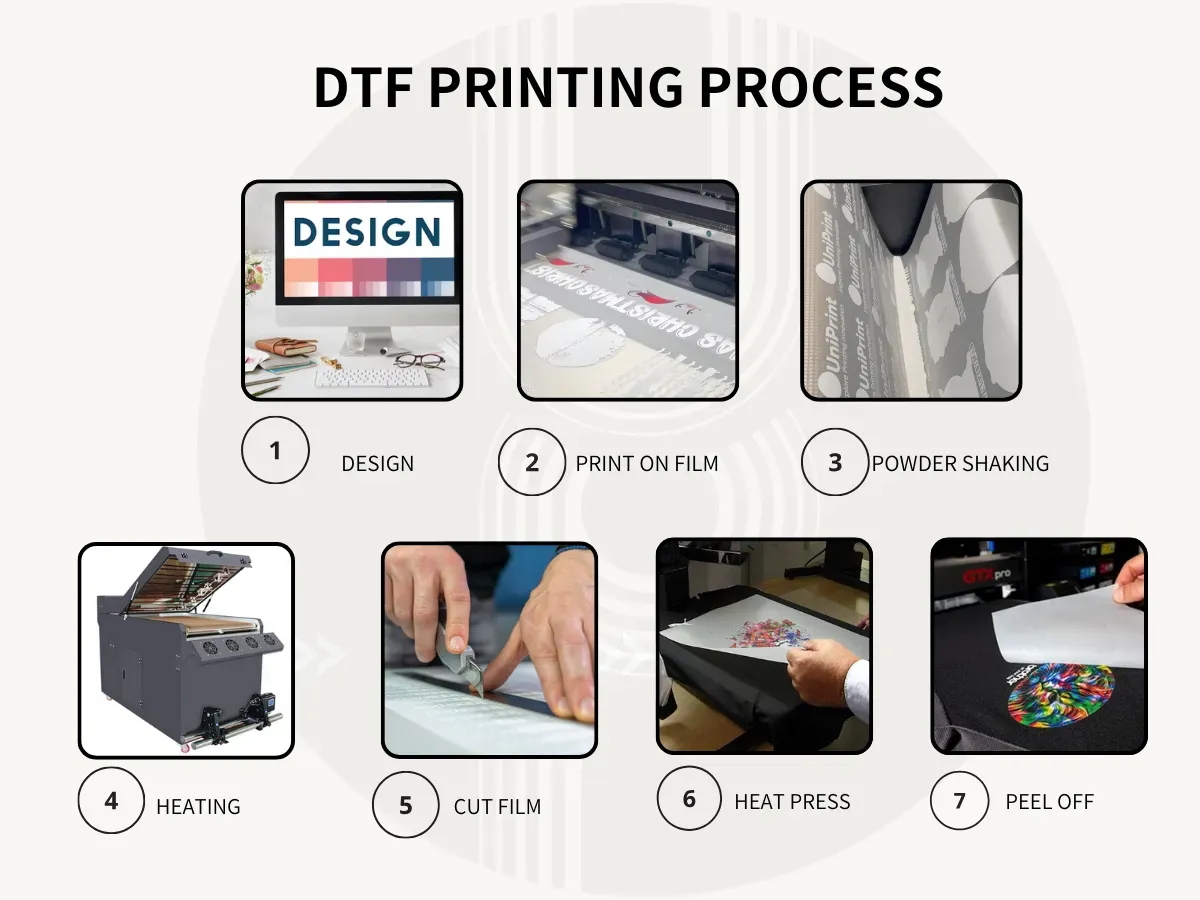
DTF Printing has emerged as a practical and versatile method for decorating fabrics and apparel. If you’re exploring garment customization, wholesale transfers, or on-demand printing, this film-to-fabric transfer method can unlock new opportunities. In this guide, you’ll learn about the printing process, essential setup steps, and how to optimize color and adhesion. We’ll compare how this approach stacks up against alternatives like DTG in terms of cost, color control, and fabric compatibility. All of this builds toward a practical foundation for implementing a reliable, production-ready workflow.
A film-to-fabric transfer method has grown in popularity for customizing apparel because it pairs digital artwork with versatile fabrics. The technique begins with printing a design onto a special PET film using pigment inks, including a white layer to ensure opacity on dark textiles. After printing, adhesive powder is applied and heat is used to bond the design to the garment, making the process accessible for small runs and on-demand production. For those evaluating options, the workflow is often compared with other textile printing methods to determine best fit for color accuracy, cost, and fabric compatibility. With the right supplies and a well-tuned setup, this film-based transfer approach can deliver durable, vibrant results across a wide range of fabrics.
DTF Printing Essentials: What It Is and How It Works
DTF Printing, or Direct-to-Film transfers, is a versatile garment decoration method that prints designs onto a specialized film and then transfers them to fabric using heat and pressure. The process starts with pigment inks and a white ink base to build opacity on a range of fabrics, from cotton to blends and some synthetics. The resulting image is bonded into the fabric through a curing and transfer sequence, delivering vibrant color, good stretch, and compatibility with diverse substrates.
Understanding the DTF printing process helps you compare it to other methods and plan a practical workflow. Key factors include the role of the white base, the use of PET transfer films, adhesive powder, and a reliable heat press. When you align design preparation, color management, and transfer parameters, you gain consistent results across different fabrics and runs.
DTF Printing vs DTG: Evaluating Costs, Quality, and Use Cases
DTF printing often offers more cost-effective options for small runs and complex multi-color designs, with less dependence on the garment’s base color than Direct-to-Garment (DTG). For many projects, DTF transfers provide straightforward color management and reliable adhesion across dark fabrics without a separate white underbase layer, depending on the system you choose.
Choosing between DTF and DTG depends on your production goals, fabric types, and order volumes. DTG can offer excellent soft hand on 100% cotton garments, while DTF shines for mixed fabrics, bulk options, and on-demand services. By evaluating factors such as setup costs, ink consumption, and production speed, you can select the method that aligns with your budget and desired quality.
Direct-to-Film Transfers: The DTF Printing Process in Detail
The DTF printing process begins with careful design and color management in your artwork, typically working in CMYK with six to eight inks. Designs are printed onto PET film using a DTF printer, with white ink applied first to establish opacity on dark fabrics. This white base is essential for achieving vivid color density after transfer.
After printing, adhesive powder is applied to the film, then the print is cured and dried to stabilize the coating. The transfer is cut to size, placed on the garment, and pressed with a heat press at recommended temperature, pressure, and time. Once cooled, the film is peeled away to reveal a durable transfer bonded to the fabric.
DTF Printer Setup and Maintenance: Getting Consistent Output
A reliable DTF printer setup begins with calibration, nozzle checks, and routine maintenance as recommended by the manufacturer. Regularly verifying alignment and color consistency helps prevent color drift and ensures predictable results across runs. Keeping the media path clean and feeding films correctly minimizes jams and defects.
In addition to printer hardware, environment and workflow matter. Maintain stable humidity and temperature, manage ink levels, and purge lines as needed to avoid clogging. Using a reputable RIP and color management workflow supports consistent halftones, precise color profiles, and efficient print queues during DTF printing.
DTF Printing Supplies: Essential Tools for Reliable Transfers
Successful DTF projects rely on quality DTF printing supplies. Core items include a dedicated DTF printer with white ink capability, pigment inks for color, and PET transfer films designed for DTF processes. The right combination delivers opacity on dark fabrics and strong color retention after transfer.
Other essential supplies include adhesive powder for bonding, curing or drying equipment, a reliable heat press with even temperature control, and RIP software to manage color management and print layouts. Investing in these components helps you achieve repeatable results, while maintaining control over production time and material costs.
Color Management, Quality Control, and Troubleshooting in DTF Printing
Effective color management is crucial for consistent results across fabrics and lighting conditions. Working in a controlled color space, validating opacity on dark textiles, and testing prints on sample fabrics help verify density, edge quality, and adhesion after transfer. Planning layers with attention to white base thickness ensures vibrant colors without washing out details.
Common issues during DTF printing can include faded colors, poor adhesion, cracking, or white ink inconsistencies. Address these by adjusting white base density, ensuring even powder distribution, checking curing times, and confirming transfer temperatures. A structured approach to troubleshooting—focused on pre-press, curing, and post-press parameters—will improve reliability and overall transfer longevity.
Frequently Asked Questions
What is the DTF printing process and how does it work for fabrics?
DTF printing, or the DTF printing process, starts with design and color management, then printing onto a specialized PET film using a white ink base followed by color inks. After applying adhesive powder and curing, the transfer is cut and pressed onto fabric. The white base provides opacity on dark fabrics, and the design bonds to the fabric through a bonding layer for durable, vibrant results.
Why are Direct-to-Film transfers effective for dark fabrics in DTF printing?
Direct-to-Film transfers use a white ink base to create opacity on dark fabrics, reducing the need for a separate underbase. This makes DTF printing supplies and the overall DTF transfer process more reliable on dark garments, across cotton, blends, and some synthetics.
DTF vs DTG: how do these methods compare in cost, color management, and fabric compatibility?
DTF vs DTG comparisons show that DTF transfers typically offer lower per-unit costs for small runs and simpler color management for complex designs, with less dependence on the garment color under the print. DTG may be preferred for certain soft-hand feels, but DTF is often more cost-effective and versatile on dark fabrics.
What are essential DTF printing supplies to start a project?
Core DTF printing supplies include a dedicated DTF printer with white ink capability, PET films, adhesive powder, curing/drying equipment, a reliable heat press, RIP software for color management, and pigment-based color inks compatible with your printer.
How should I set up and maintain a DTF printer for consistent results?
For DTF printer setup and maintenance, perform regular calibration and nozzle checks, ensure proper media loading, monitor ink levels, maintain a stable print environment, and use a reputable RIP workflow to manage color, halftones, and print order.
What are common troubleshooting tips for DTF printing, including white ink and adhesion issues?
Common issues include faded colors, poor adhesion, cracking, and white ink inconsistencies. Address these by adjusting white base density and curing time, ensuring even adhesive powder distribution, trimming transfers correctly, verifying pressing temperature/time, and checking white ink priming and nozzle health.
| Topic | Key Points |
|---|---|
| What is DTF Printing? | Direct-to-Film transfers: designs printed on PET film using pigment inks (often white base) and transferred to textiles via heat; yields vibrant color, good stretch, compatible with cotton, blends, some synthetics. |
| DTF vs Other Methods | Compared with DTG: lower per-unit costs for small runs; simpler color management for complex designs; less dependence on garment color. Compared with screen printing: good for multicolor designs with less labor; best for small-to-medium runs. |
| How DTF Works (Process) | 1) Design artwork in CMYK; 2) Print on PET film with white base then color inks; 3) Apply adhesive powder; 4) Cure/dry; 5) Sort/cut transfer; 6) Transfer to fabric with heat press and peel. |
| Equipment & Supplies | DTF printer with white ink; PET films; adhesive powder; curing/drying equipment; heat press; RIP software & color management tools. |
| Printer Setup & Maintenance | Calibrate/nozzle tests; load media properly; manage ink; maintain stable environment; use RIP workflow for color management. |
| Design, Color & Quality Control | Color management in controlled space; test on sample fabrics; high-contrast vector/raster art; plan white base layer for opacity; validate fabric compatibility. |
| Troubleshooting Common Issues | Faded colors: adjust white base and curing; Poor adhesion: even powder, clean surface; Cracking/peeling: check tension and transfer temp; White ink issues: ensure priming and curing. |
| Applications & Use Cases | Custom apparel, small-batch runs, promotional merch, on-demand printing, diverse fabrics depending on ink compatibility. |
| Cost, ROI & Practical Considerations | Investment varies; ROI often favorable for smaller runs; factor printer, inks, films, powder, heat press, maintenance; training and workflow optimization matter. |
| Best Practices for Long-Term Success | Run tests on various fabrics; maintain clean workflow; keep spare parts; document parameters; invest in quality supplies. |
Summary
DTF Printing offers a flexible, scalable approach to garment decoration for small businesses, hobbyists, and professional shops. By mastering the DTF Printing process, selecting reliable supplies and equipment, and applying solid color management and maintenance practices, you can produce vibrant, durable transfers across a wide range of fabrics. When comparing DTF with DTG or evaluating printer setups, the Direct-to-Film transfer method provides a compelling combination of cost efficiency, workflow simplicity, and versatile substrate compatibility for modern apparel projects.